
Notes on screening at the speed candidates move.
How automated phone screens work, where they fit in hourly hiring, and what we have learned running thousands of them.
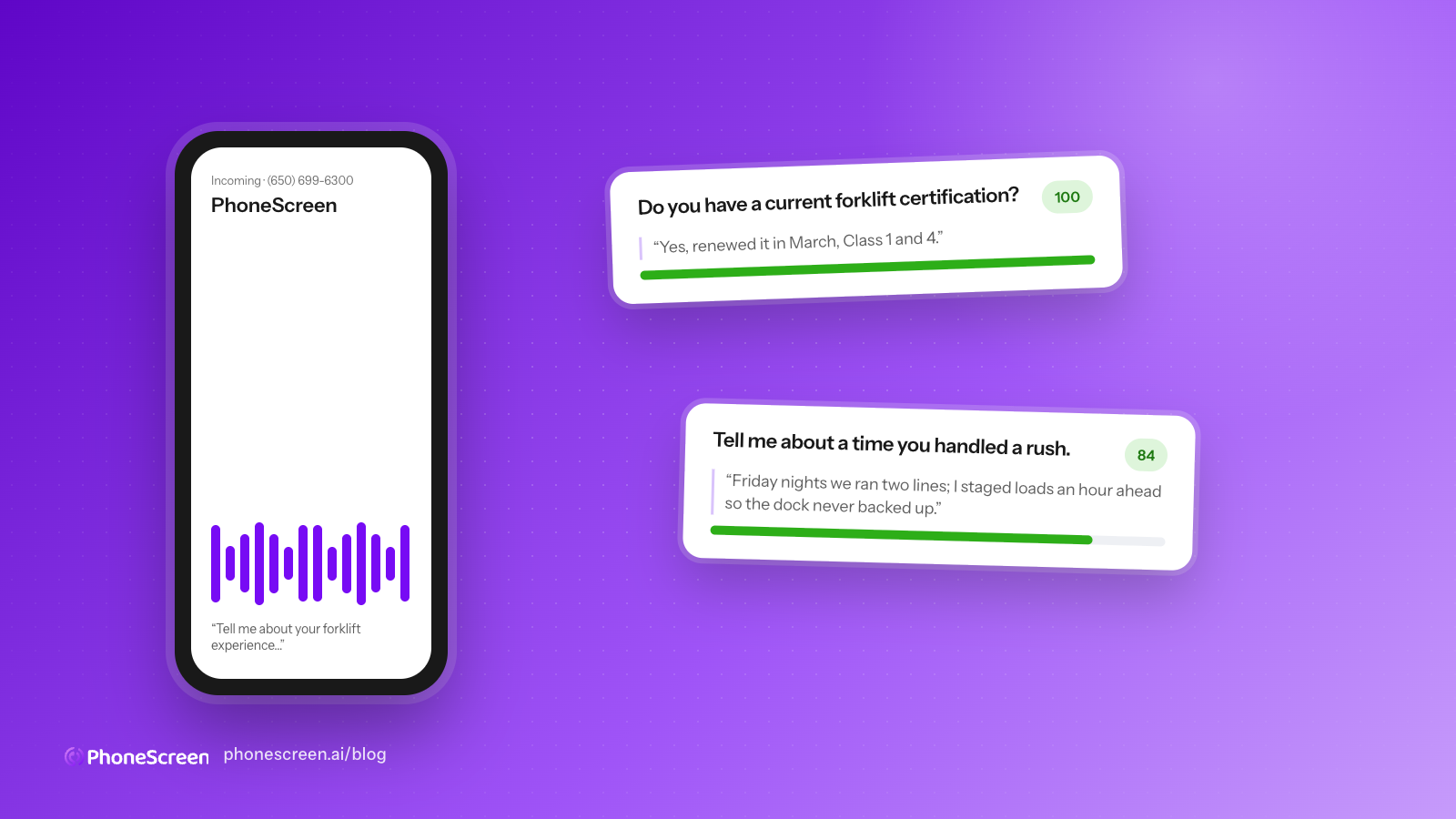
What an AI phone screen actually does (and what it doesn't)
A plain explanation of the automated phone screen: who talks to whom, what gets recorded, what you get back, and the decisions that stay with you.
Read →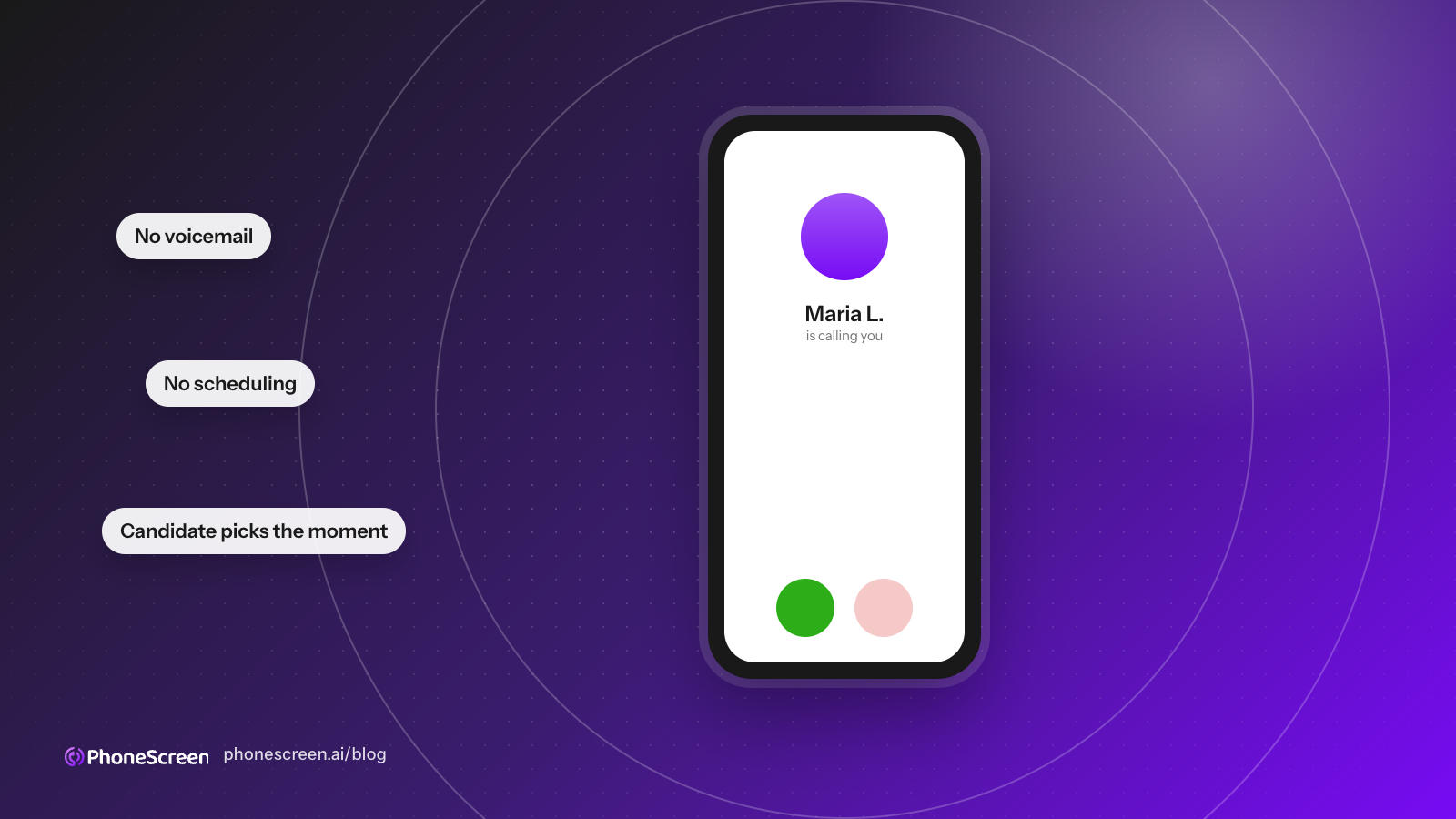
Why candidates should call you, not the other way around
Unknown numbers go to voicemail. Flipping the direction of the call fixes reach rates, removes scheduling, and puts the candidate in control of the moment.
Read →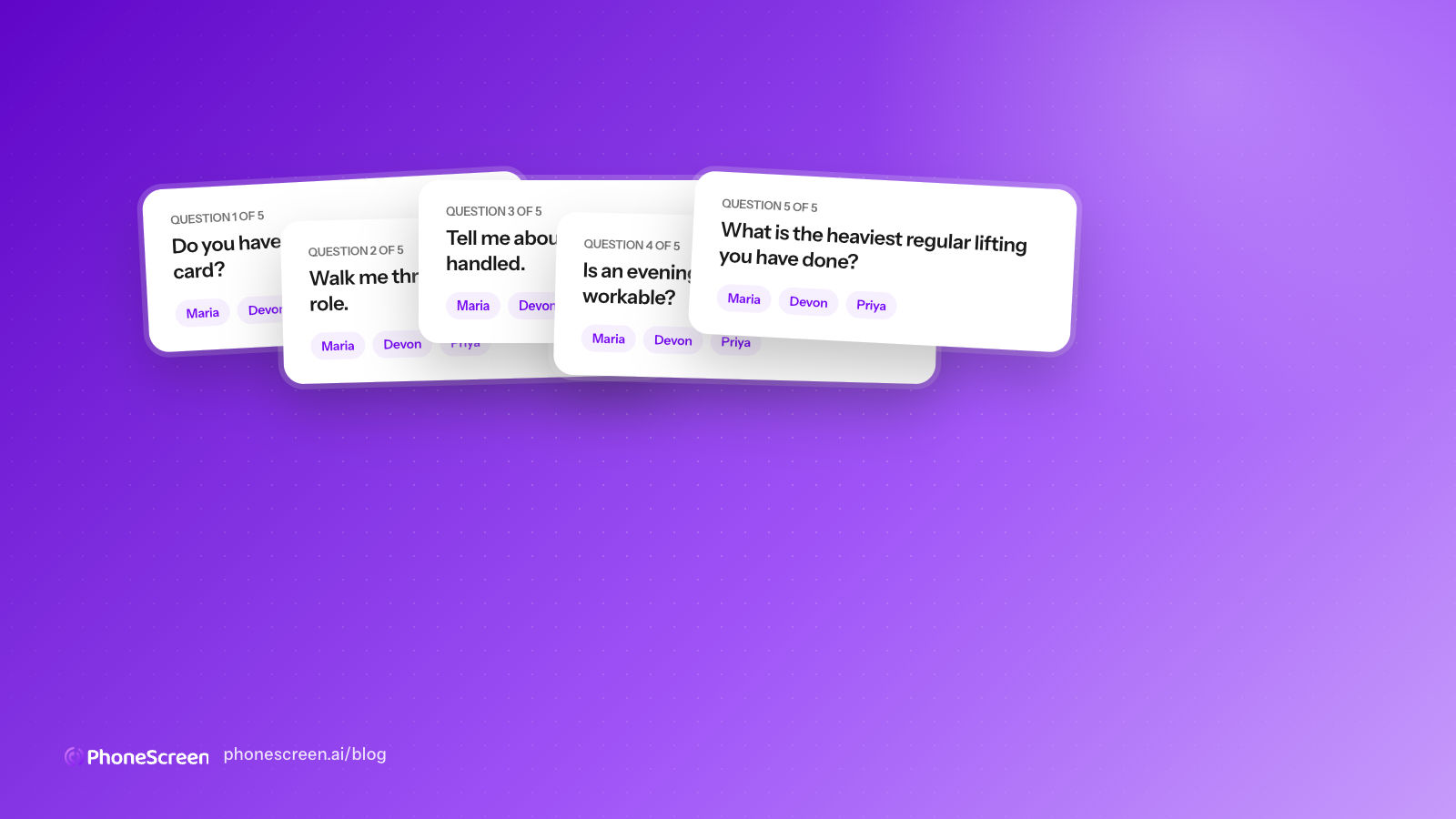
The case for asking every candidate the same questions
Structured screens are more predictive, easier to compare, and fairer. Here is why consistency is the core of PhoneScreen, and how to write questions that hold up.
Read →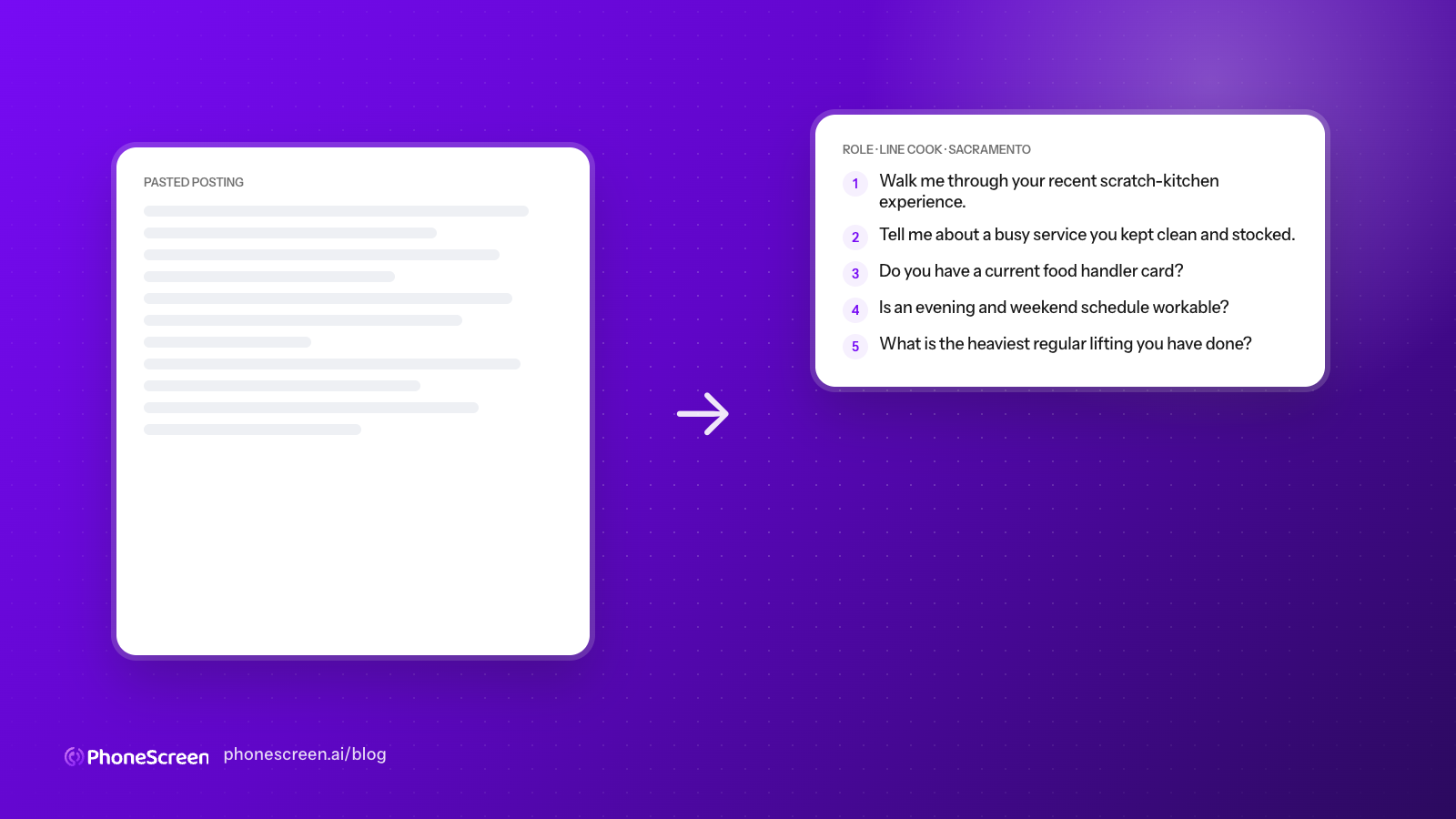
From job posting to screening questions in ten seconds
Paste any job posting and PhoneScreen drafts the role: title, location, requirements, and five screening questions you can edit before anyone calls.
Read →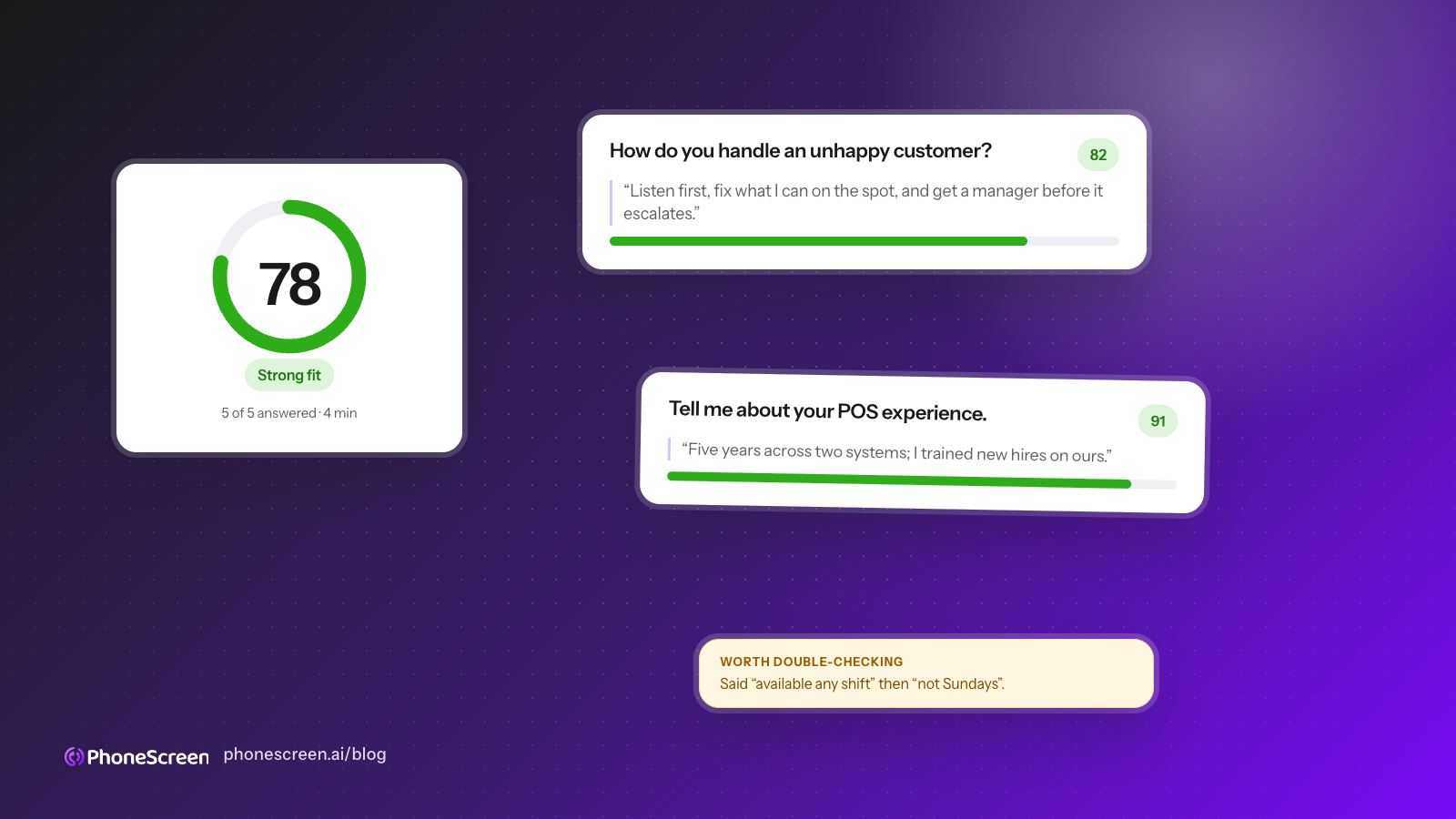
How to read a PhoneScreen scorecard
What the score means, how each answer is rated, what the flags are for, and a five-minute routine for reviewing a day's screens without listening to a single call.
Read →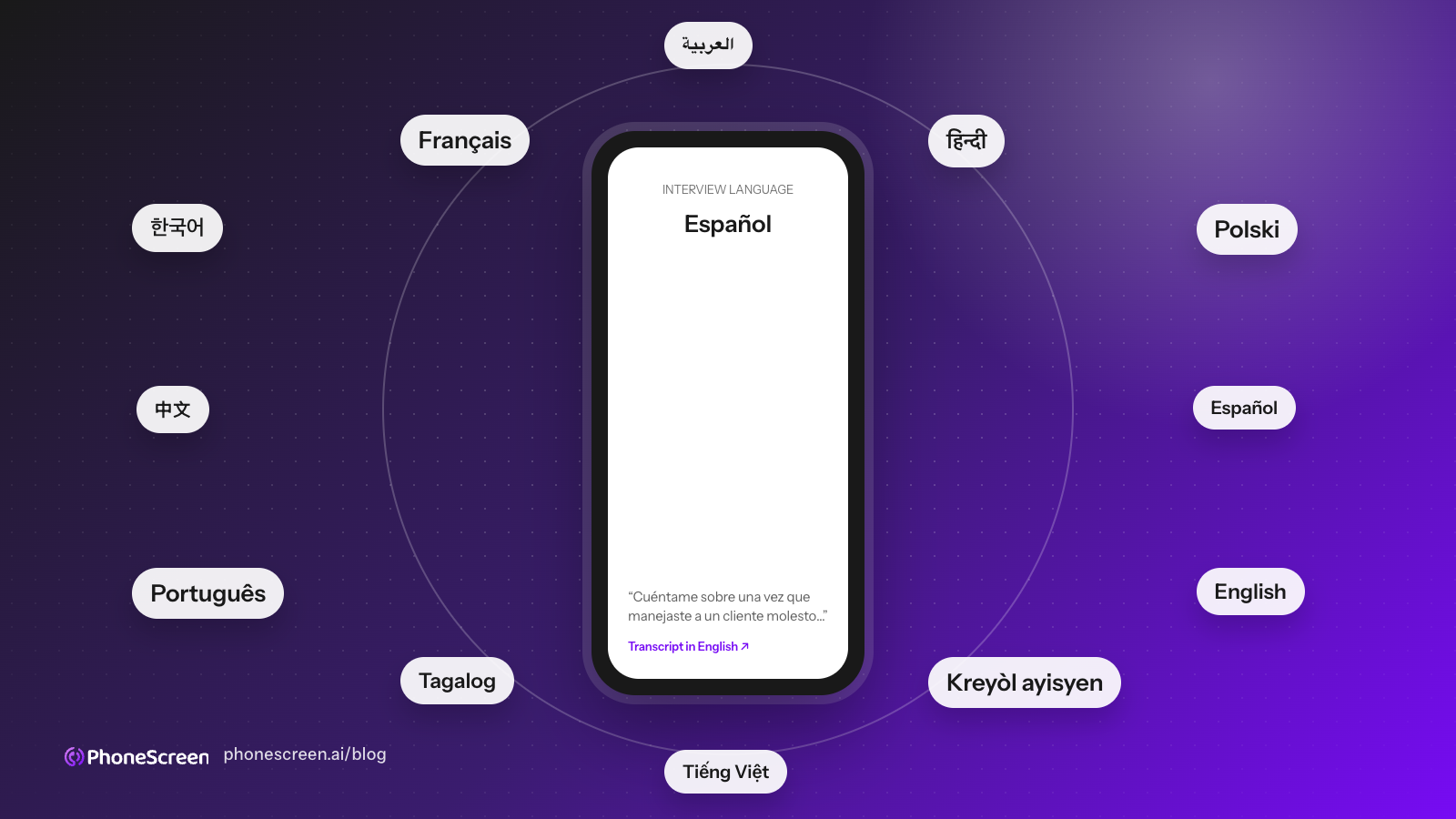
Screen in the candidate's language, read it in yours
Candidates pick from 34 languages before they call. The interview runs entirely in that language, and the recruiter reads an English transcript and scorecard.
Read →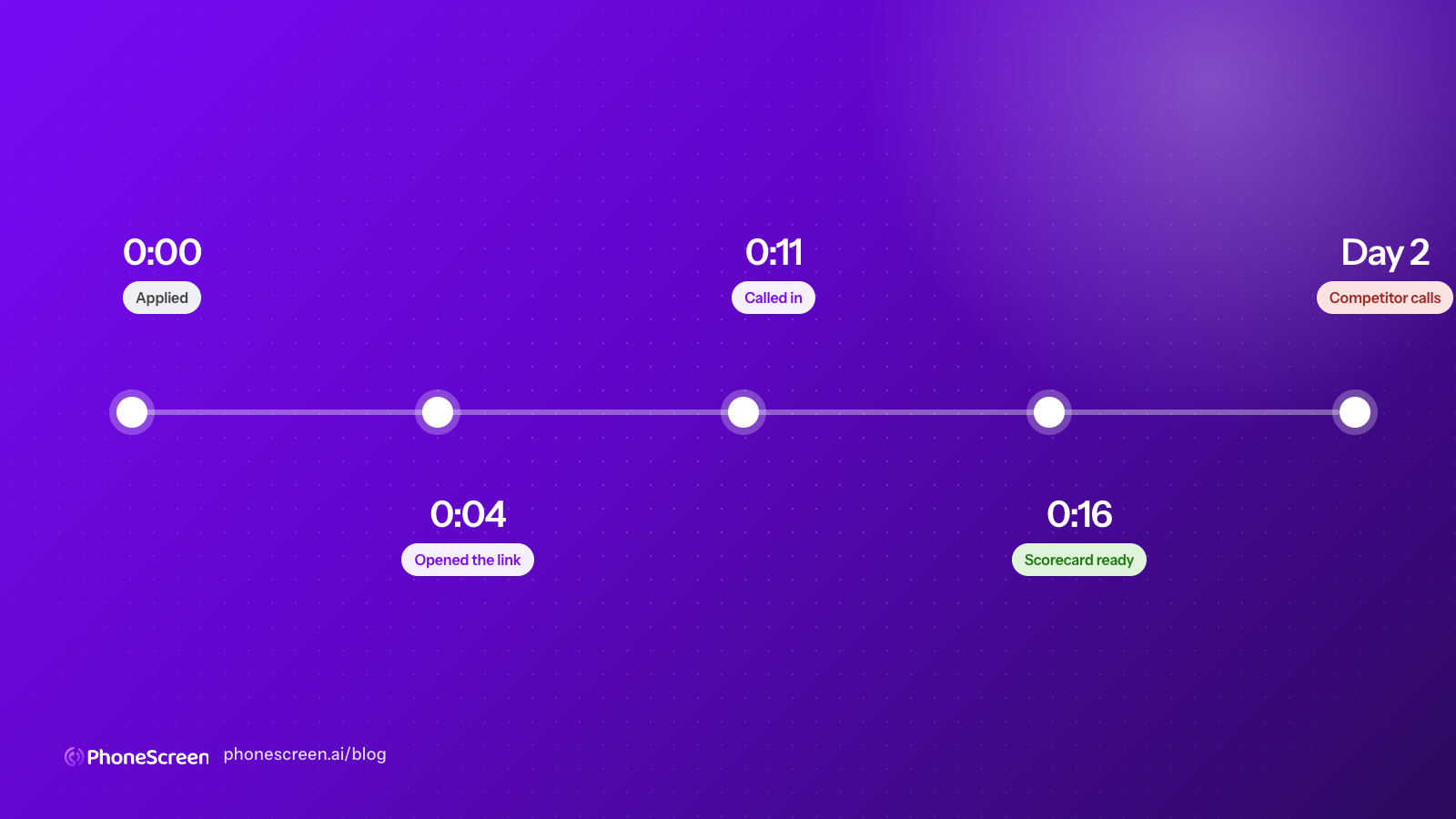
The first hour after someone applies decides who you hire
In hourly hiring the best candidates are gone within a day. What happens in the first hour, and how to make sure the first conversation happens then.
Read →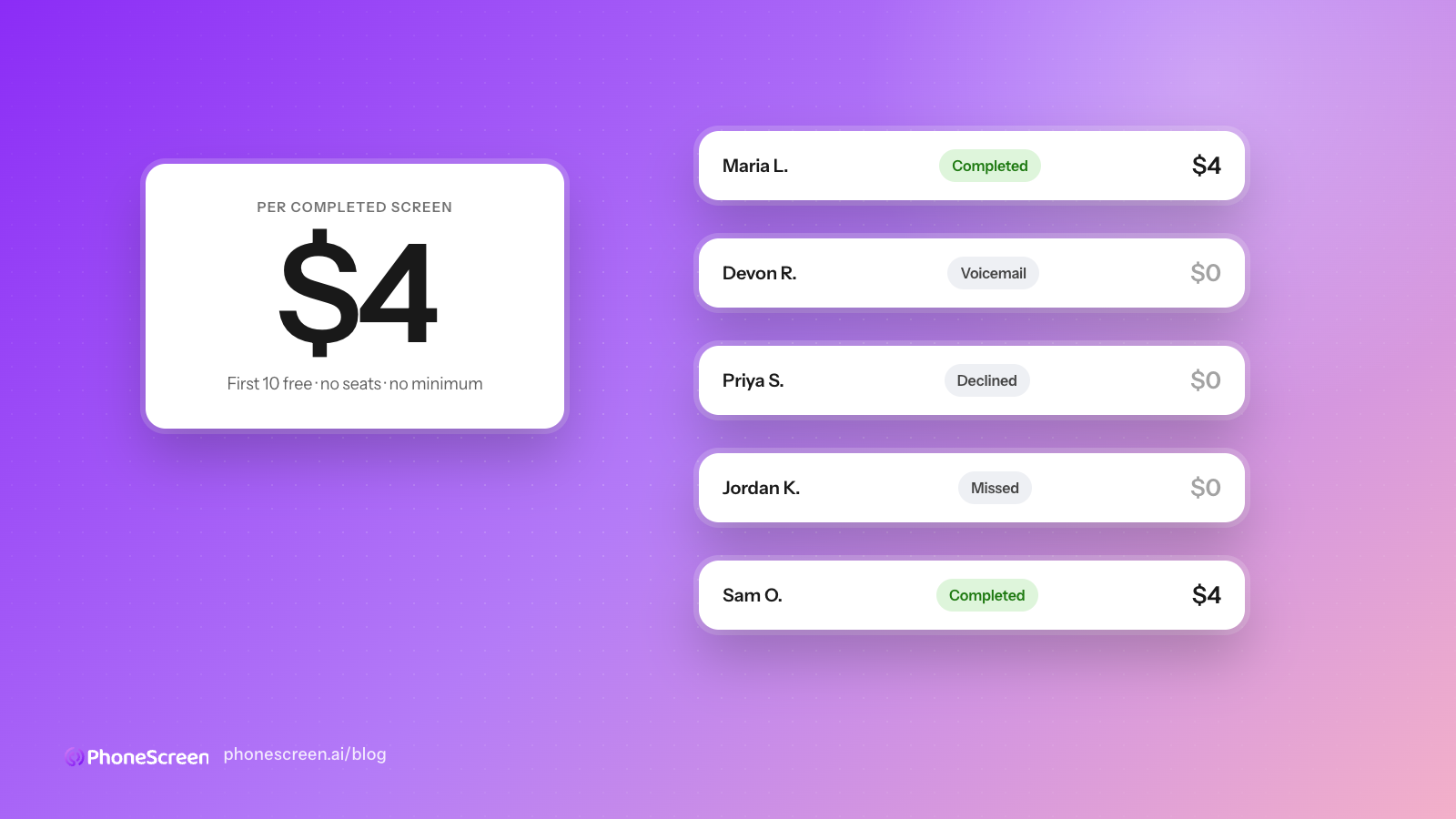
Why we charge per completed screen and nothing else
No seats, no monthly minimum, no charge for missed calls or voicemail. What counts as a completed screen, and why the model matches how hiring actually happens.
Read →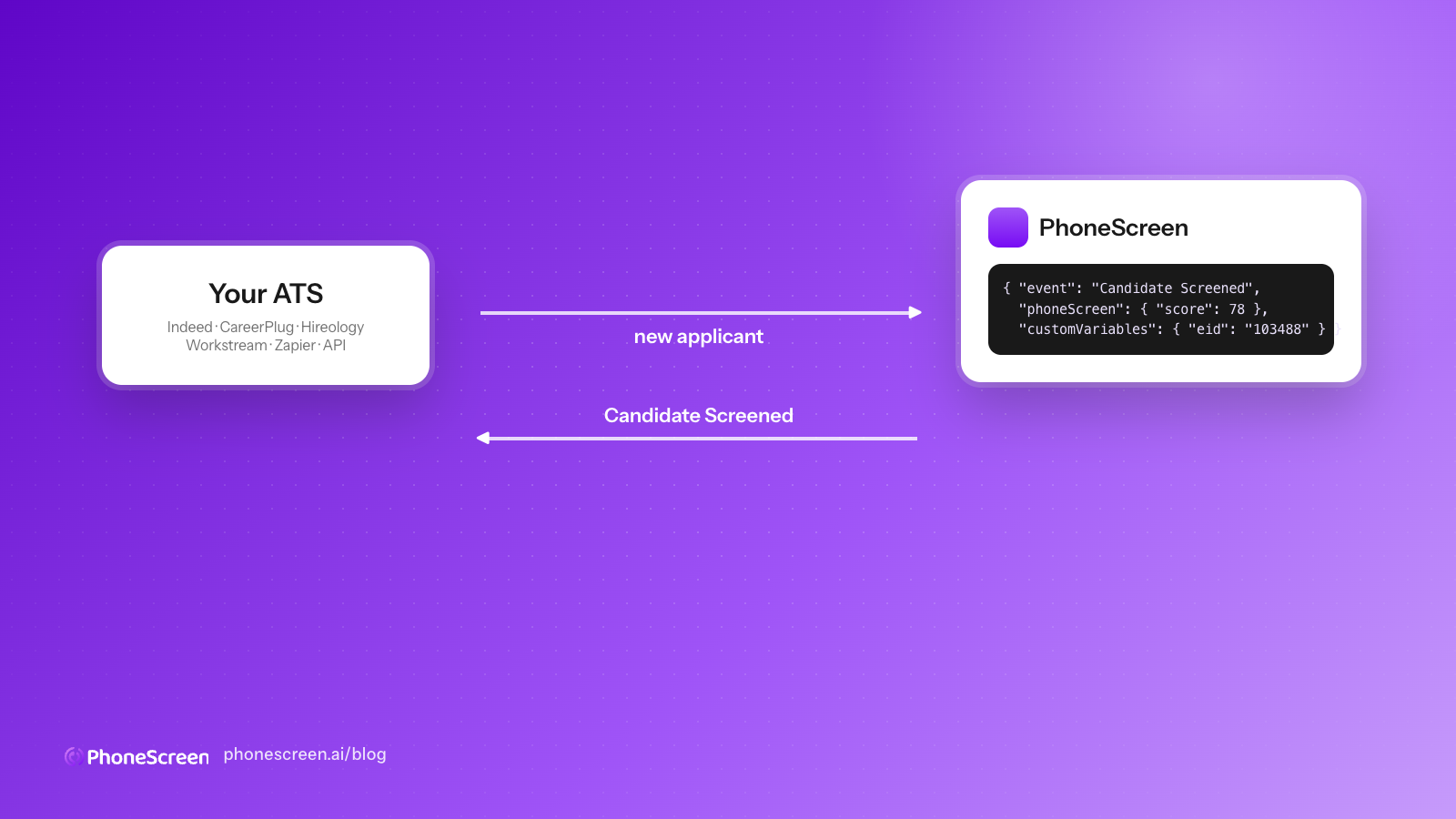
Connecting PhoneScreen to your ATS: links, webhooks, and the API
Three ways to plug screening into the tools you already use, from a link in an auto-reply to a full API integration that creates roles and receives scorecards.
Read →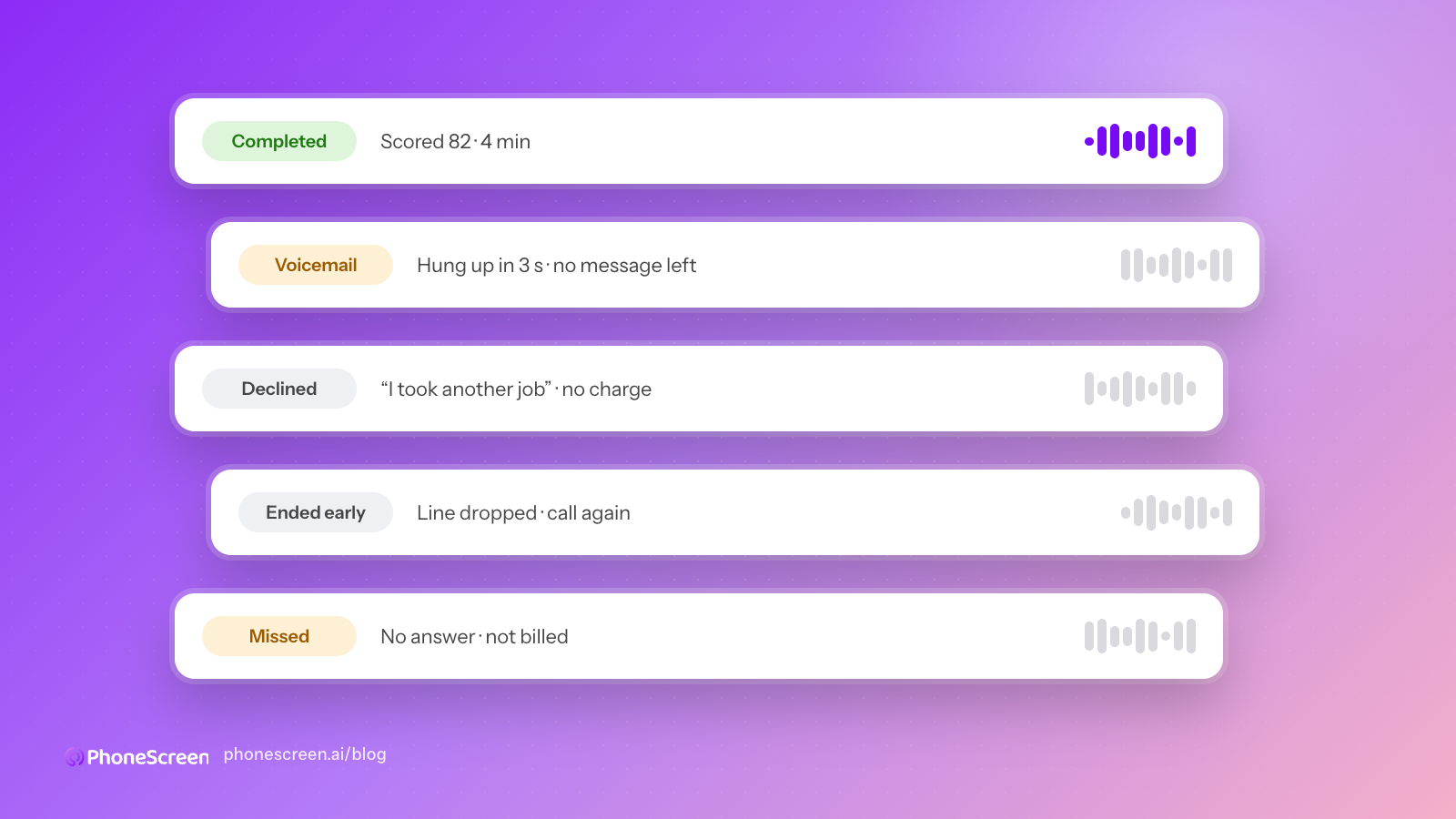
Voicemail, hang-ups, and 'not interested': what happens to the messy calls
Real phone calls are messy. Here is exactly how the interviewer handles voicemail, early hang-ups, candidates who decline, and dead lines, and what each one looks like in your dashboard.
Read →Topics: Basics · Product · Hiring · Fairness · Pricing · Integrations · RSS
Screen your next candidate tonight
Set up takes ten minutes. Your first 10 screens are free, then $4 per completed screen. No monthly fees.