Why candidates should call you, not the other way around
Unknown numbers go to voicemail. Flipping the direction of the call fixes reach rates, removes scheduling, and puts the candidate in control of the moment.
· 2 min read · by the PhoneScreen.AI team
Every outbound screening tool fights the same losing battle: the candidate’s phone. Carrier spam labels, silenced unknown numbers, a shift that just started. Reach rates for cold outbound calls to applicants sit somewhere between 20 and 40 percent, and every retry costs another day.
We built PhoneScreen the other way around. The candidate calls you.
The mechanics
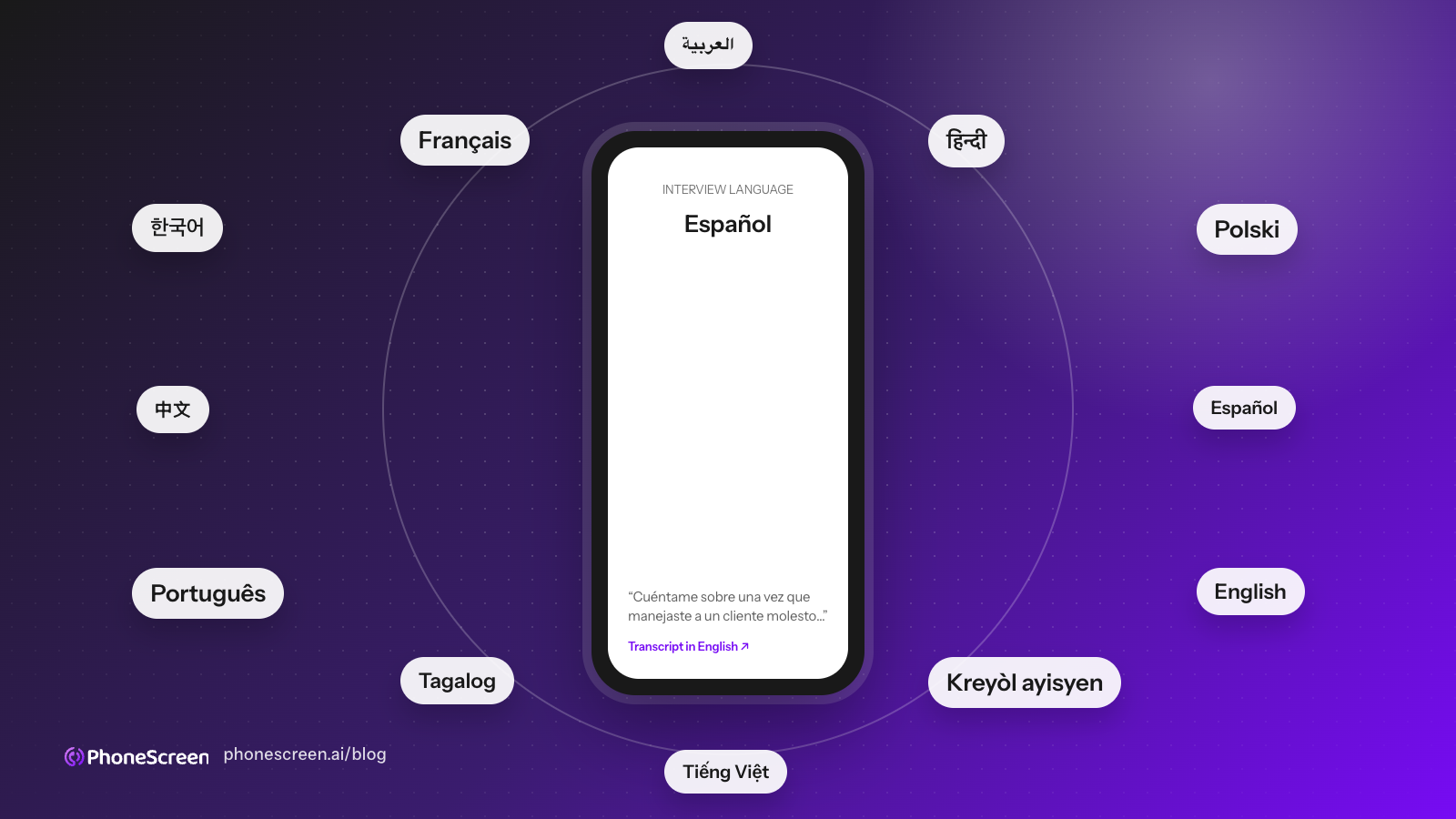
After someone applies, they get a link. The link opens a one-screen form: name, email, phone, and optionally the language they want to interview in. Submitting it shows a number to call. They dial it whenever they are ready, the interviewer recognizes the number they entered, greets them by name, and the screen begins.
If they are calling from a different phone than the one they entered, the interviewer asks for a short code from the page instead. Nothing else to set up.
What flipping the direction fixes
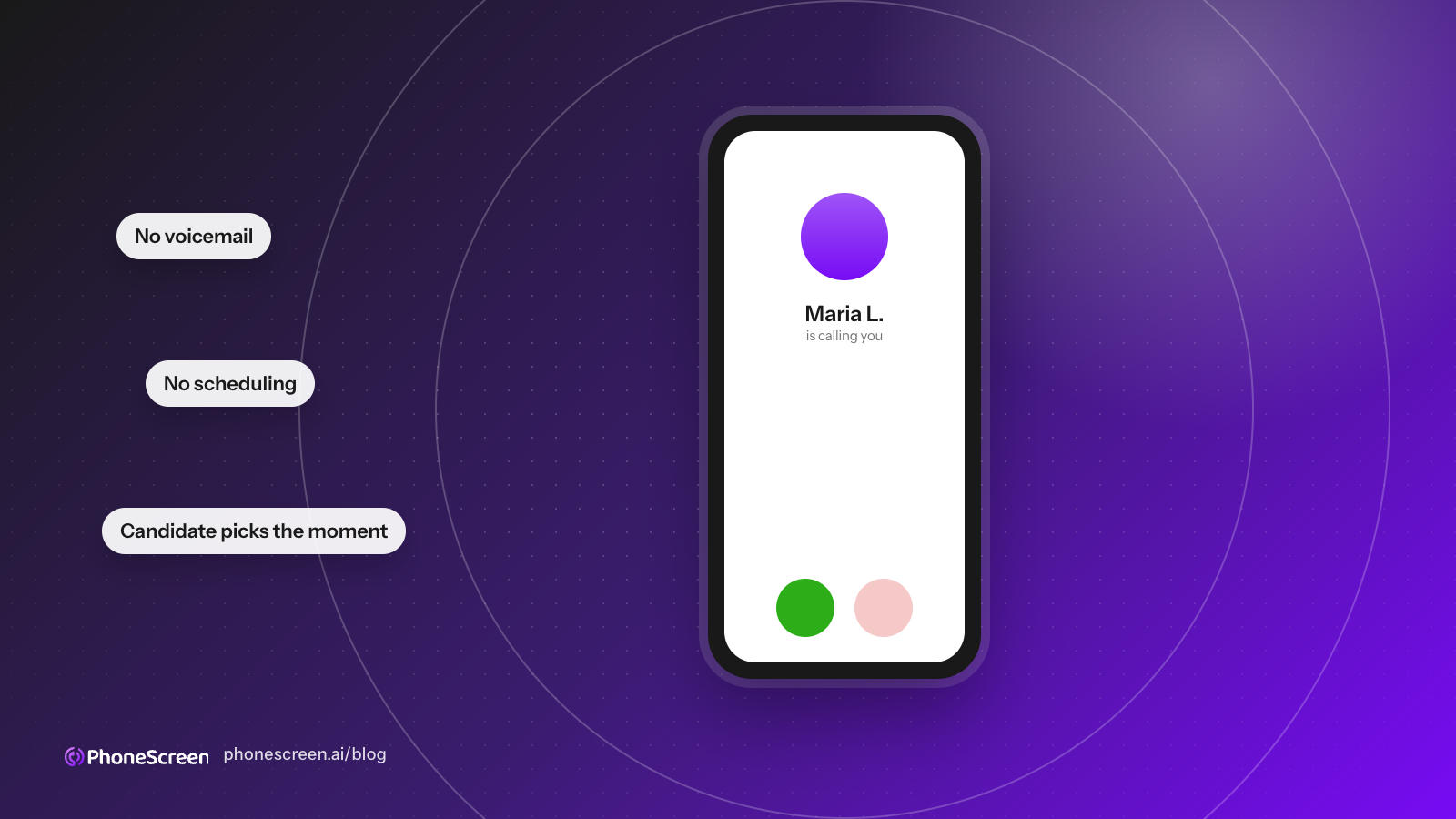
Reach. A call the candidate places always connects. There is no voicemail, no spam label, no “who is this?”
Scheduling. Nobody picks a slot. The candidate calls between shifts, on the bus, at 9 pm after the kids are down. For hourly roles that is when they are actually free.
Consent. The candidate chose the moment. They are not caught off guard in the break room, and they arrive at the call ready to talk. Answers are longer and more specific than in interrupted outbound calls.
Speed. The median time from submitting the form to a finished scorecard is a few minutes. The recruiter sees a scored candidate before they would have found time to dial.
Outbound calling optimizes for the recruiter’s calendar. Call-in optimizes for the candidate’s. Only one of those has the information you need.
“But some candidates won’t call”
Some won’t. In practice the ones who don’t call in also don’t answer outbound calls, don’t reply to texts, and don’t show up to scheduled interviews. The call-in step is a gentle filter for intent, and it happens on day one instead of after three missed calls.
For the cases where you really do want to dial out, you still can. A recruiter can place a call to a candidate from the dashboard or through the API, and ATS integrations can start one automatically. The interviewer is the same; only the direction changes.
Caller ID and trust
Your number is a real local number. Candidates see it on the apply page before they dial, and the interviewer says who it is calling on behalf of in the first sentence. If you place outbound calls, the same number shows on their screen, so a callback lands in the right place.
What to tell candidates
The apply page already explains it, but the phrasing that works best in your own emails is short:
- “Next step: a five-minute phone screen you can do any time. Open the link, then call the number shown.”
Candidates understand it immediately, and most of them call within the hour.
Curious what the candidate hears?
Take the three-question sample screen for a paper sales job at Dunder Mifflin. Your scorecard lands in your inbox.