The first hour after someone applies decides who you hire
In hourly hiring the best candidates are gone within a day. What happens in the first hour, and how to make sure the first conversation happens then.
· 2 min read · by the PhoneScreen.AI team
Ask any restaurant manager or staffing recruiter what happened to the great applicant from Tuesday and you will get the same answer: someone else called first.
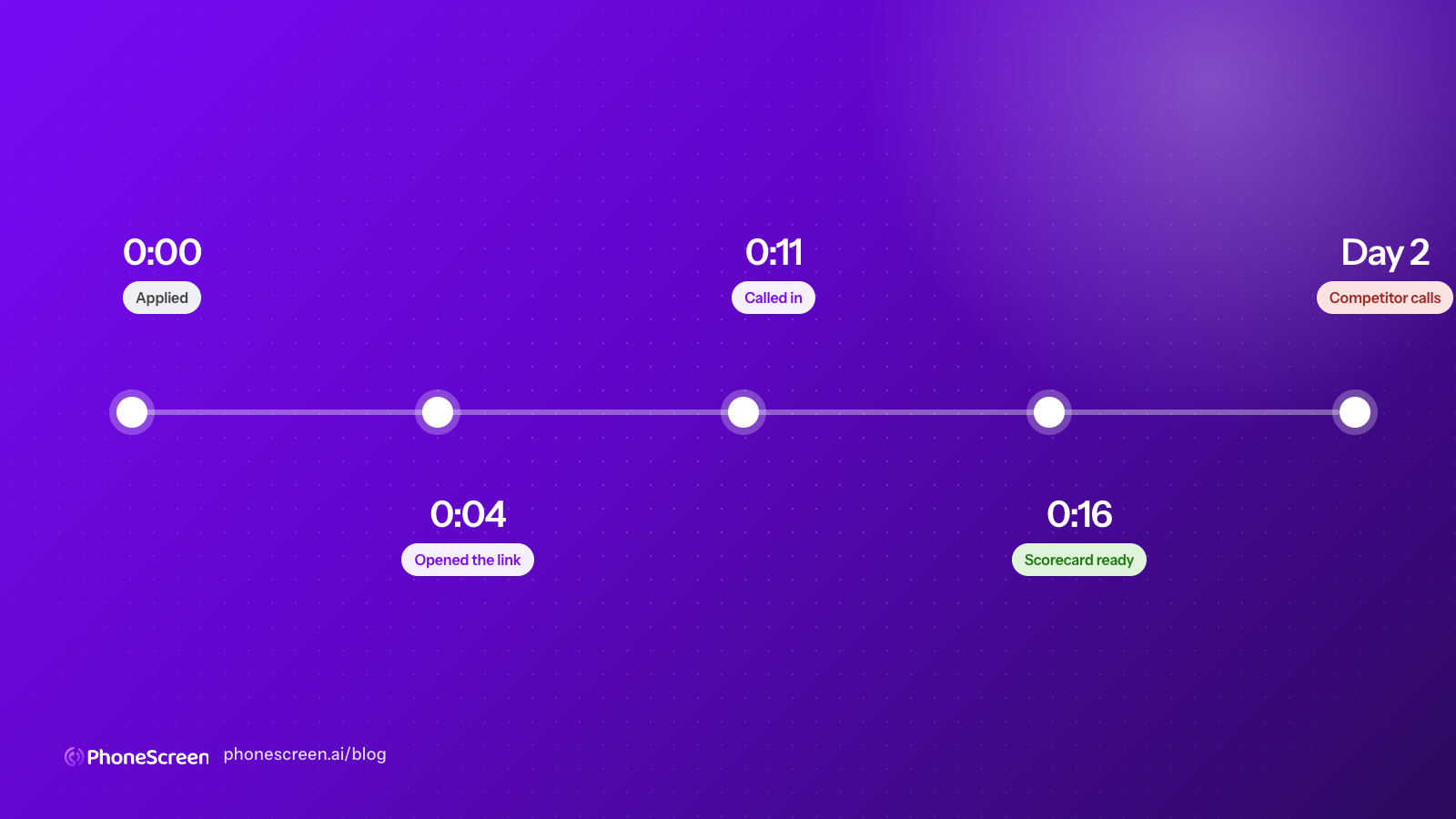
Hourly candidates apply to several places at once, and they take the first offer that feels real. “Real” starts with a conversation. If yours happens on Thursday and a competitor’s happens Tuesday afternoon, you are interviewing the people they passed on.
What the first hour usually looks like
An application lands in the ATS. It joins forty others. Late in the day, or the next morning, a recruiter opens the queue and starts dialing. Voicemail. Voicemail. A callback request. By the time a conversation happens the median gap is a day or two, and the candidate has already talked to two other employers.
The recruiter is not slow. The process is: one person, many candidates, and a phone that only reaches a third of them.
What it looks like with a call-in screen
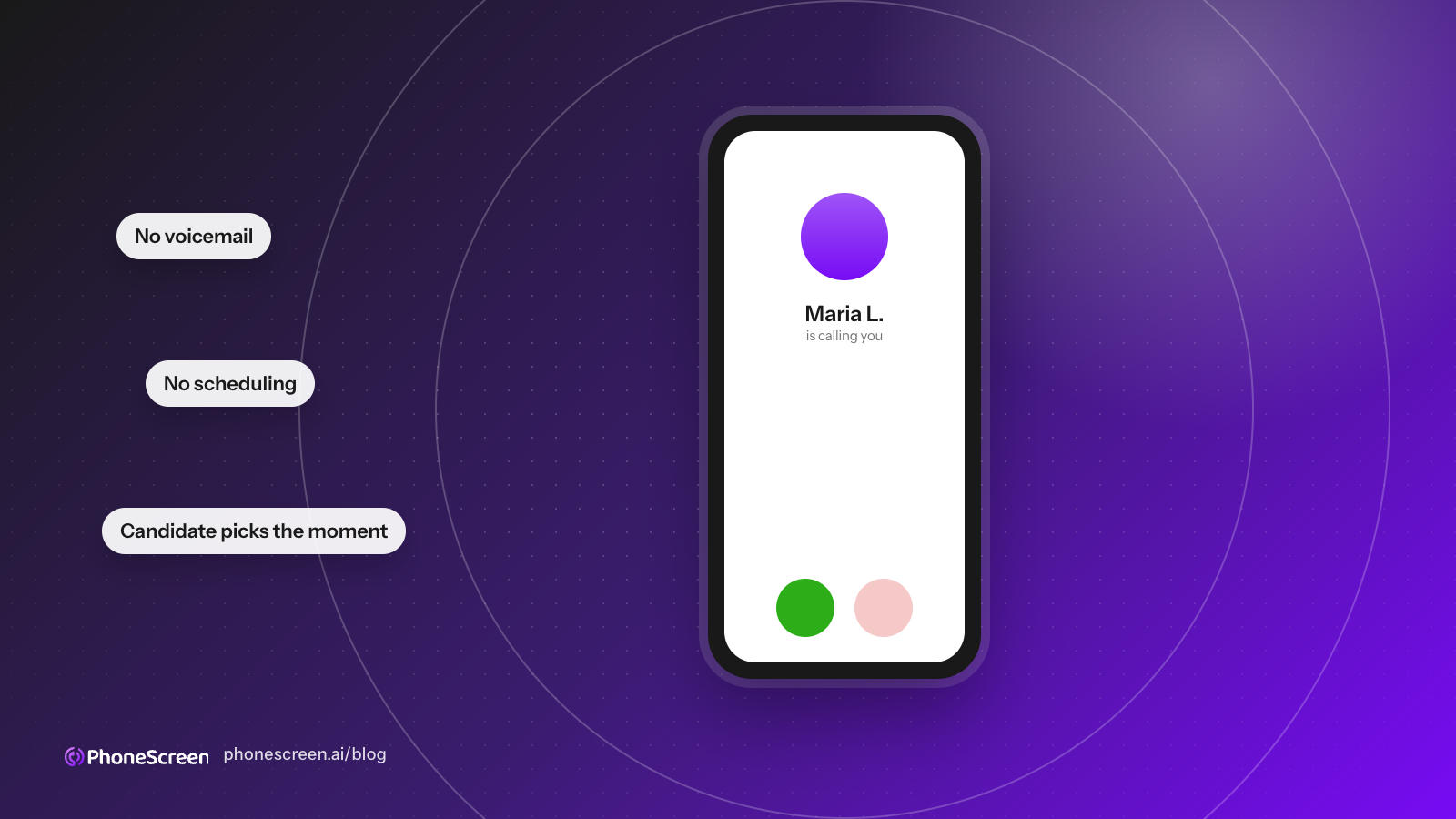
The application lands. The candidate immediately gets a link, from the ATS or from an auto-reply. They open it, fill in three fields, and call the number, often within minutes because they are still sitting there with the job posting open.
Five minutes later a scorecard exists. The recruiter’s queue now contains screened candidates, sorted by score, with answers to the questions they would have asked on the phone. The human call, when it happens, is to the top three, not to forty.
Speed to hire is not about the recruiter working faster. It is about the first conversation not waiting for the recruiter at all.
Numbers from real roles
Across the roles running on PhoneScreen, the median time from a candidate submitting the apply form to a finished, scored screen is a few minutes. Most candidates call within the hour. Screens finish at all hours, including a steady share after 8 pm and on weekends, which is when a lot of hourly candidates actually have a quiet moment.
None of that requires a recruiter to be awake.
How to set it up so it happens
- Put the apply link everywhere the application happens. In the job post, in the ATS auto-reply, in the confirmation text. If your ATS integrates, let it send the link automatically.
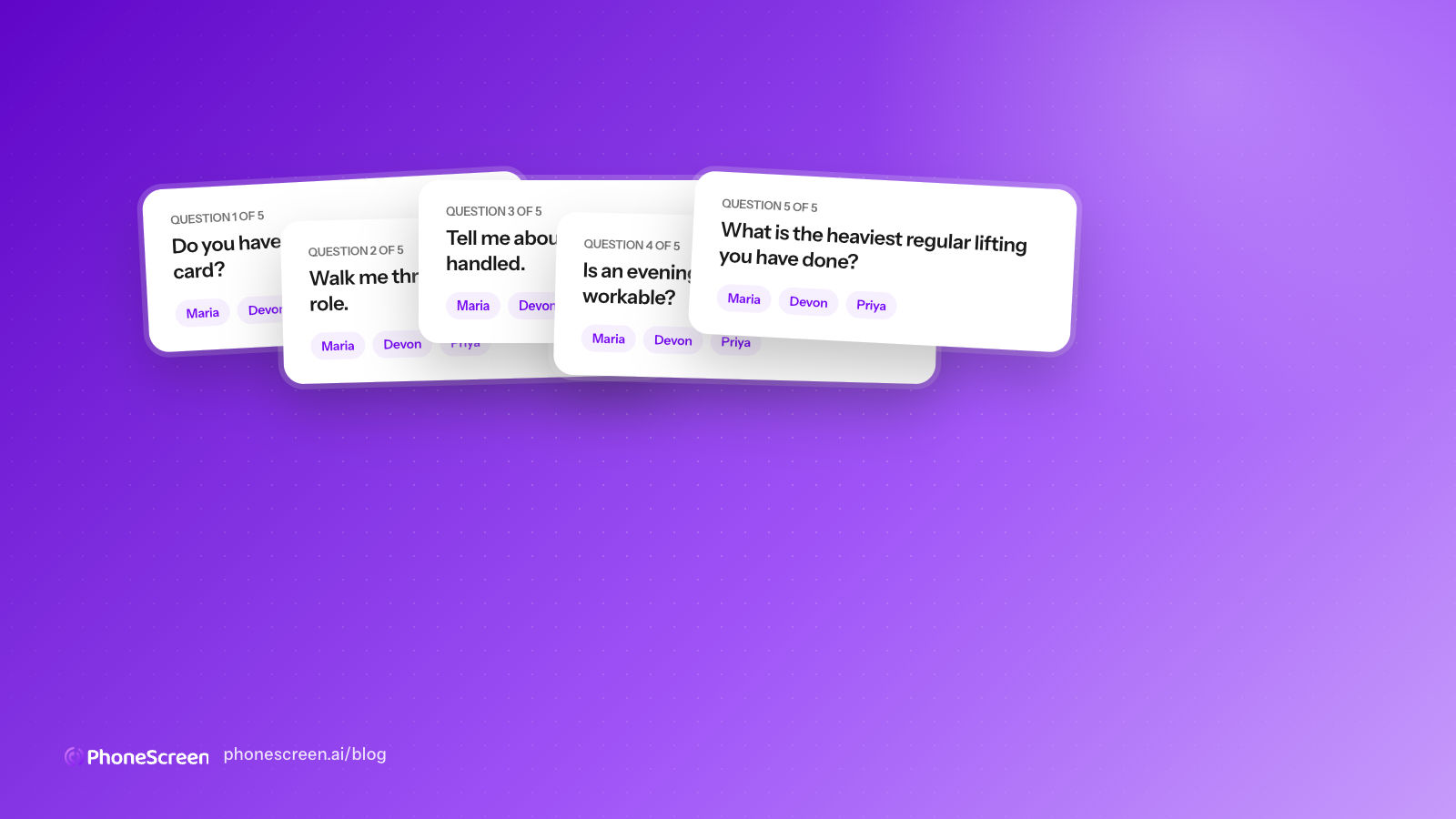
- Keep the screen short. Five questions, three to six minutes. Long screens get abandoned.
- Review daily, and early. Ten minutes each morning on the “needs review” list keeps the top candidates moving while they are still interested.
- Call the accepted ones the same day. They already answered your questions; that call is about selling the job.
The compounding effect
Faster first conversations mean better candidates in the interview stage, which means fewer interviews per hire, which frees the recruiter to be even faster. Teams that make the change stop measuring time-to-hire in weeks.
The shift is not more effort. It is moving the first conversation from the recruiter’s calendar to the candidate’s first hour.
Curious what the candidate hears?
Take the three-question sample screen for a paper sales job at Dunder Mifflin. Your scorecard lands in your inbox.