What an AI phone screen actually does (and what it doesn't)
A plain explanation of the automated phone screen: who talks to whom, what gets recorded, what you get back, and the decisions that stay with you.
· 3 min read · by the PhoneScreen.AI team
Most people hear “AI phone screen” and picture one of two things: a robot that grills candidates, or a black box that decides who gets hired. It is neither. Here is what actually happens, step by step, so you can decide whether it belongs in your process.
The screen is a conversation about your questions
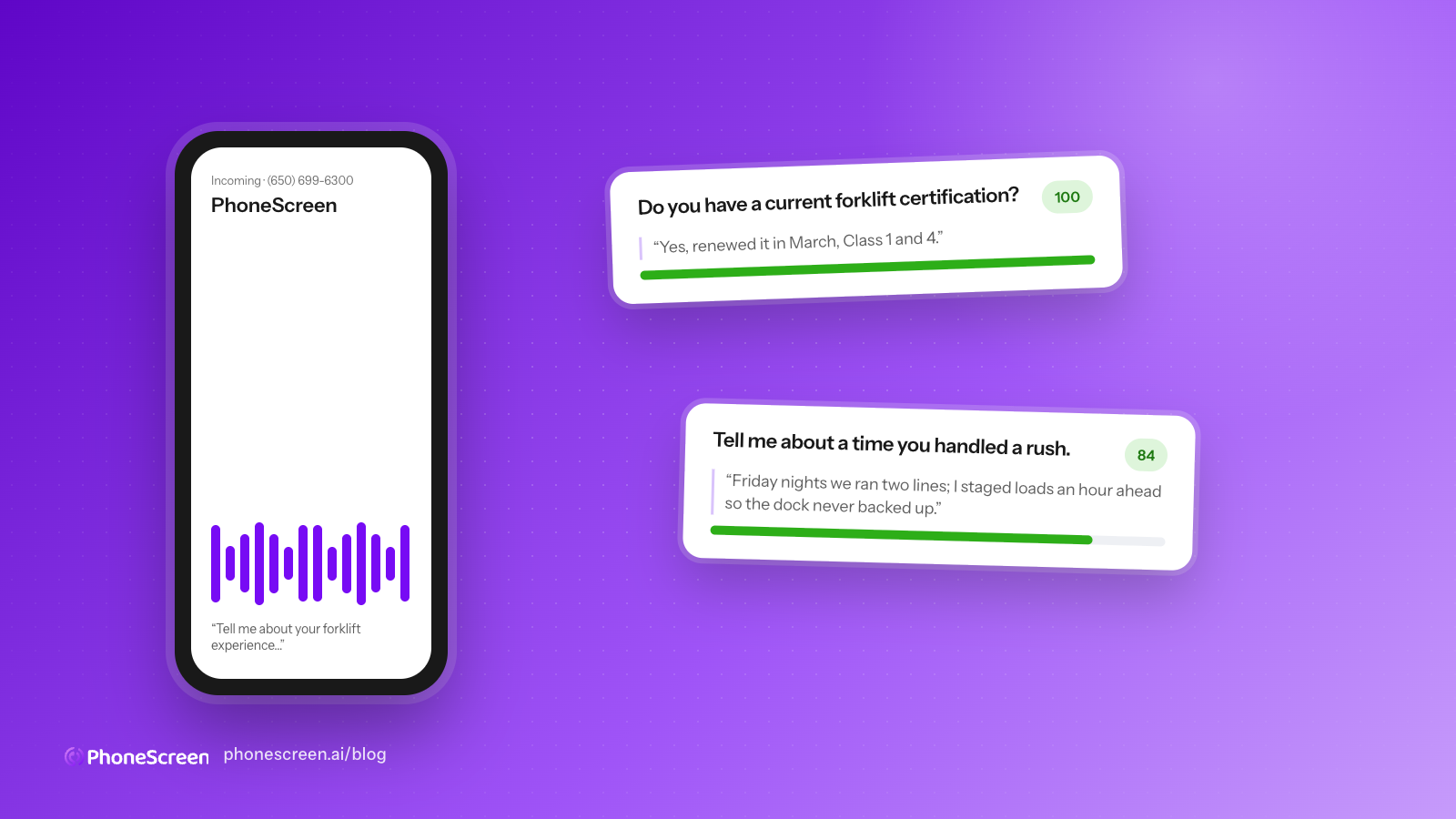
Every role in PhoneScreen has a short list of screening questions. You write them, or paste the job posting and let us draft five for you to edit. When a candidate calls in, the interviewer introduces itself by name, checks that it is a good time, and asks those questions one at a time, in order.
It listens the way a person would. If an answer is short, it asks once for a concrete example. If the candidate asks about the schedule or pay, it answers from the context you gave it and moves on. If the candidate says they are no longer interested, it thanks them and ends the call. The whole thing usually takes three to six minutes.
The interviewer does not improvise new questions, does not probe protected characteristics, and does not make an offer. It runs your script, well, every time.
What you get back
A few seconds after the call ends, the screen appears in your dashboard with:
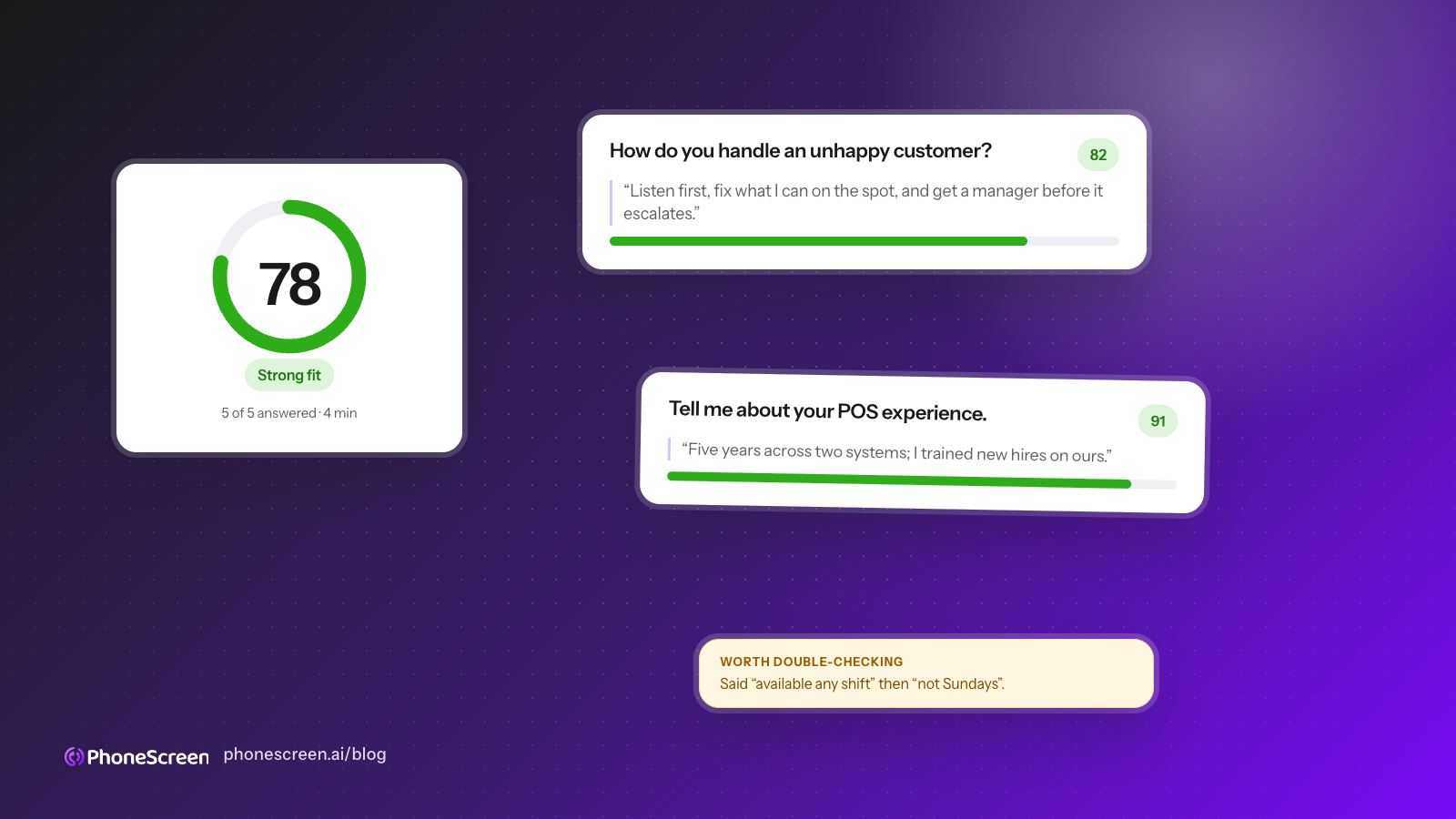
- A score out of 100, the average of a per-question score.
- Each question with the candidate’s answer pulled out of the transcript, and a one-line reason for the score if you want it.
- Flags worth double-checking: a contradiction, a possible disqualifier, a bad line.
- The recording and the full transcript, in English even if the call was in another language.
If you use an applicant tracking system, the same scorecard is posted to it through a webhook or the API, so the recruiter never has to leave their queue.
What it does not do
It does not decide. A score is a consistent summary of what the candidate said against what you asked. Two recruiters reading the same scorecard can still disagree about who to advance, and that is the point: the judgment stays with people, but they are now judging the same information for every candidate.
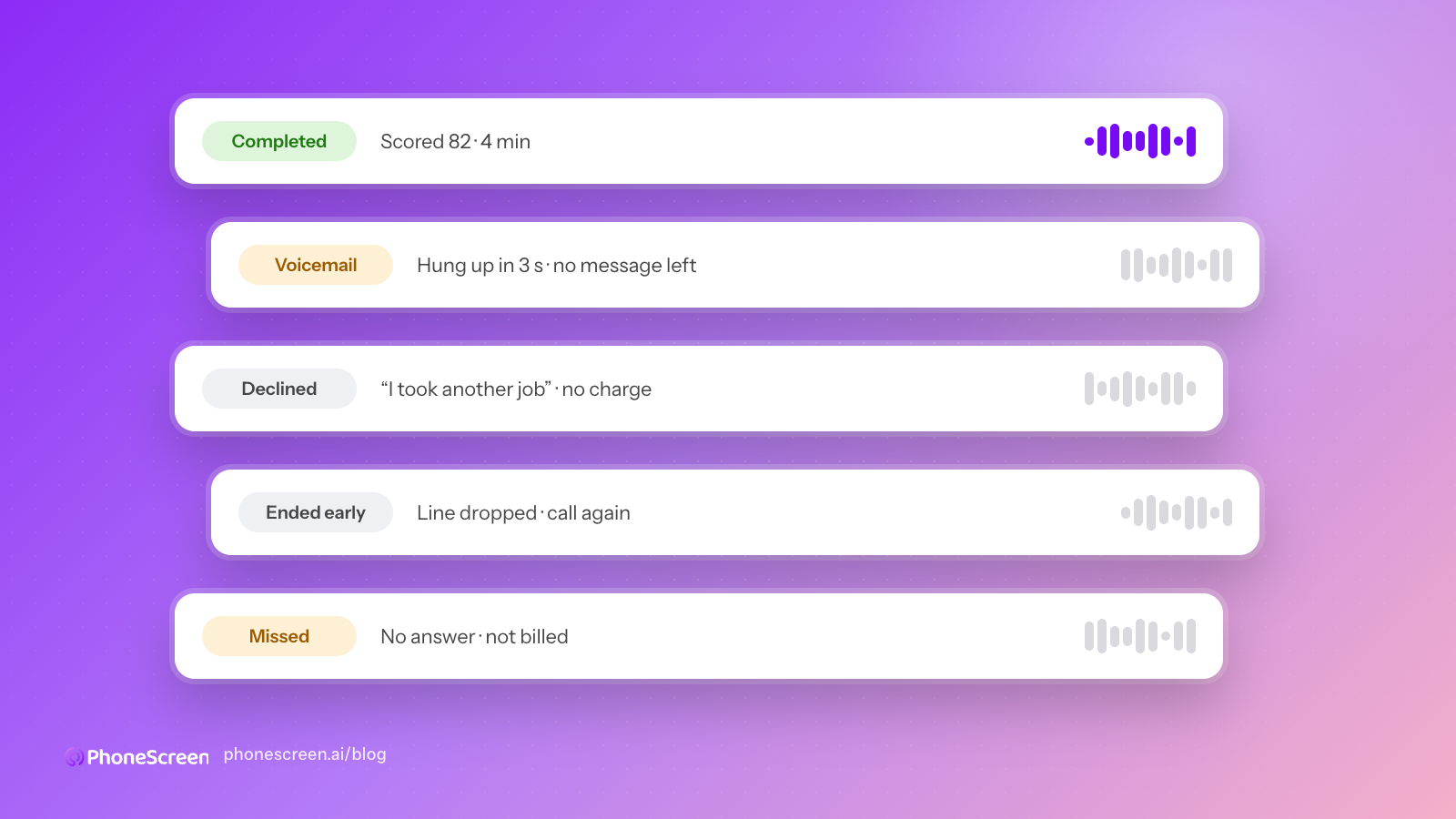
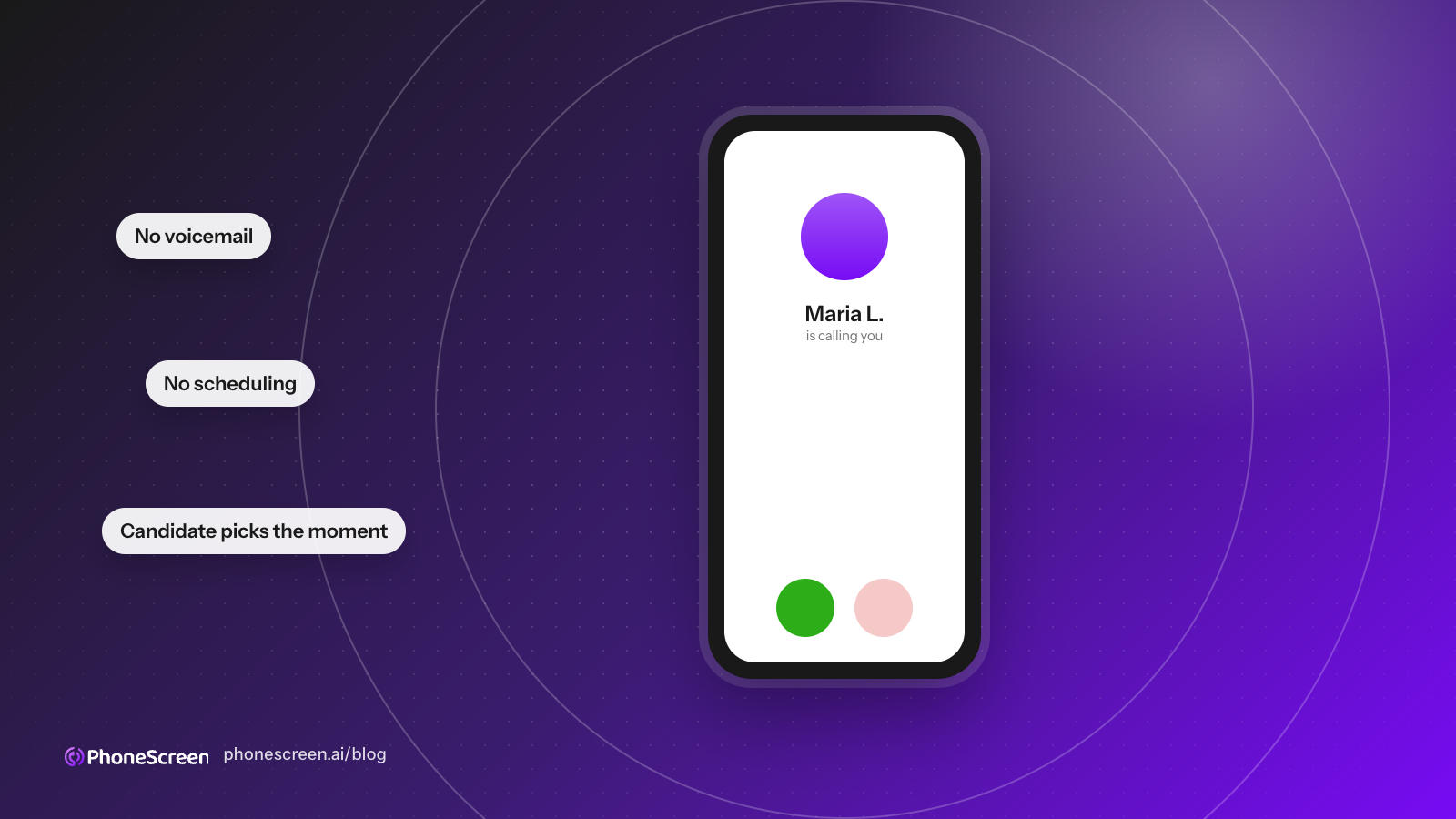
It does not call people out of the blue. Candidates get a link, fill in a short form, and call when they are ready. Nobody is ambushed at work.
It does not replace the interview. Think of it as the fifteen-minute phone call a recruiter would love to do with every applicant but cannot, because there are two hundred of them and one recruiter.
Where it fits
The screen sits between “applied” and “worth a human’s time.” For hourly and high-volume roles that gap is where most candidates are lost: the good ones take another job before anyone calls them back, and the recruiter’s day disappears into voicemail.
Put the screen there and the first conversation happens within minutes of applying, at the candidate’s convenience, in the same shape for everyone. What the recruiter does next is up to them.
Try one yourself
The fastest way to understand it is to hear it. The demo page places a two-minute call to your phone with sample questions, no account needed. Or set up a role with your own questions and screen yourself: your first ten screens are free.
Curious what the candidate hears?
Take the three-question sample screen for a paper sales job at Dunder Mifflin. Your scorecard lands in your inbox.