How to read a PhoneScreen scorecard
What the score means, how each answer is rated, what the flags are for, and a five-minute routine for reviewing a day's screens without listening to a single call.
· 2 min read · by the PhoneScreen.AI team
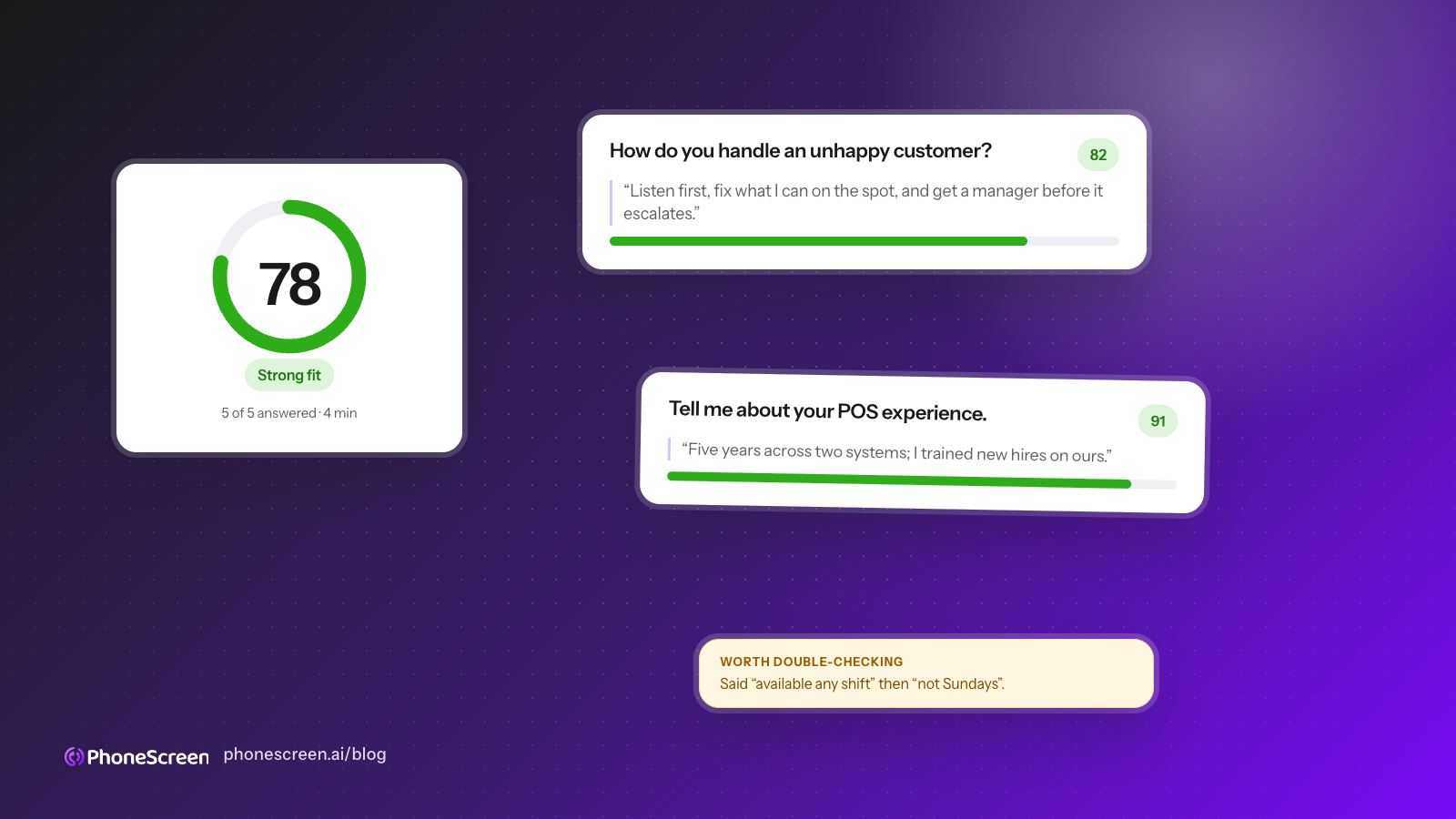
A finished screen turns into a scorecard. Reading one well takes about a minute once you know where to look, and most recruiters can clear a morning’s screens before their coffee cools.
The number at the top
The score is 0 to 100 and it is an average: each question gets its own score and the card shows the mean. A label next to it gives the band at a glance, strong from 70, mixed from 40, weak below that.
Treat it as a sort key, not a verdict. Two candidates at 82 and 79 are the same candidate. A 82 and a 31 are not.
Each answer, in the candidate’s words
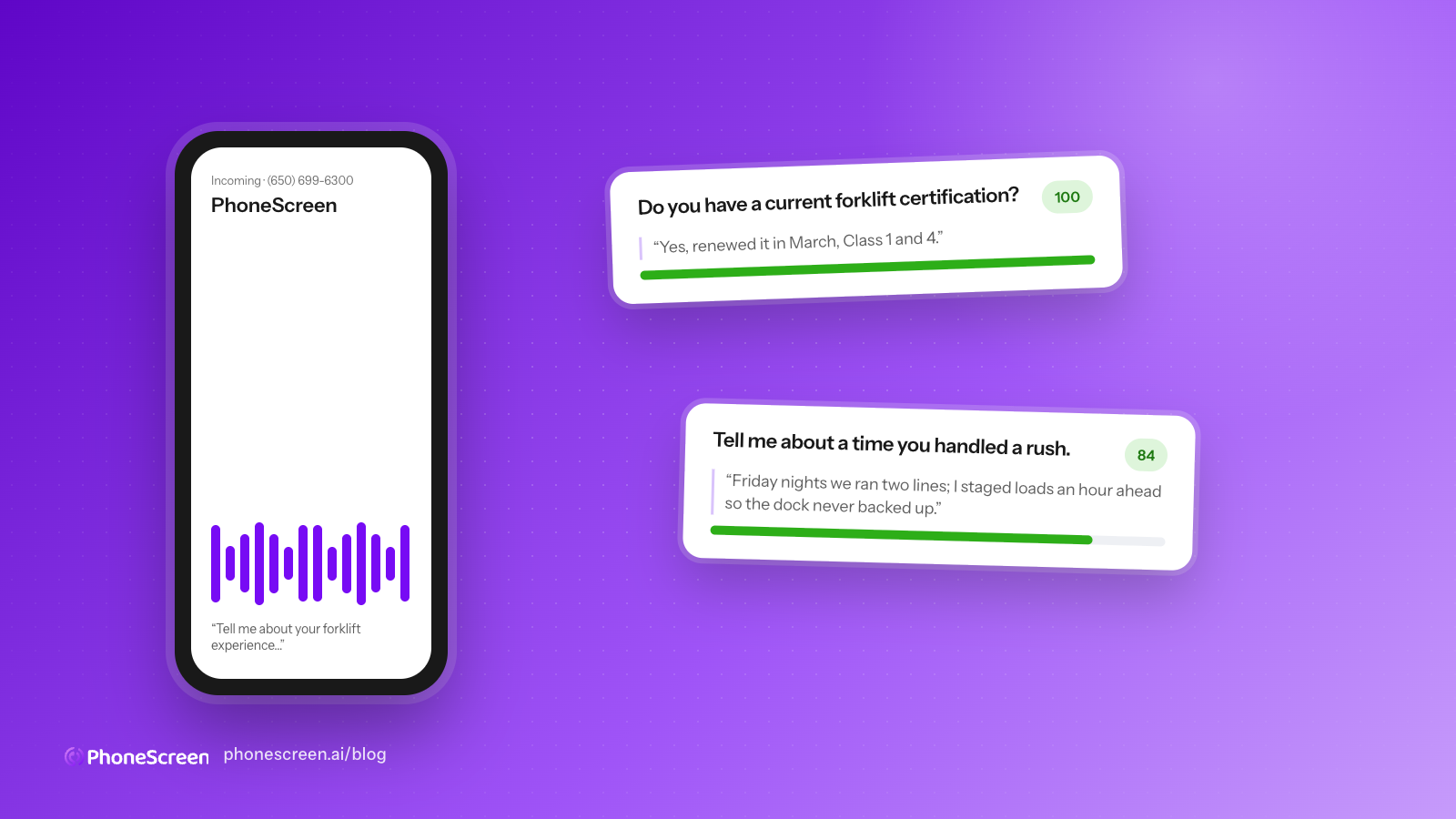
Under the summary, every question appears with the answer pulled out of the transcript. Not a paraphrase: the candidate’s own sentences, so you can hear their voice without playing the audio. Beside it, the score for that question.
Yes/no questions show Yes or No instead of a number, because “do you have a CDL” does not need a scale.
If you want to know why an answer scored the way it did, open Why this score under it. One or two sentences explain what the rater saw: “Gave a concrete example with duration and scope” or “Confirmed the requirement but offered nothing else.”
Flags
Some things are worth a second look regardless of the score. The scorecard lists them in a “worth double-checking” box:
- a contradiction between two answers;
- a possible disqualifier the candidate mentioned in passing;
- signs the line was bad or the candidate was distracted, which can depress a score unfairly.
Flags are the rater being honest about uncertainty. A high score with a flag deserves thirty seconds of transcript.
The score tells you where to start. The answers tell you what to think. The flags tell you where to be careful.
The transcript and recording
Below the answers are the recording, which you can scrub, and the transcript as a conversation. If the call was in Spanish or any of the thirty other languages, the transcript is shown in English with the original a click away.
Most recruiters never need this section. It is there for the calls that matter: the borderline candidate, the disputed answer, the hiring manager who wants to hear it.
A five-minute review routine
- Open the candidates list and choose Needs review: completed screens with no decision yet.
- Sort by score, highest first.
- For each card, read the summary sentence and skim the answers. Mark Accepted or Rejected right there in the list.
- Open the transcript only when a flag or a surprising score asks for it.
That is the whole job. The candidates you accept are the ones a human calls next, and they have already answered your questions once, so that call starts at the interesting part.
Curious what the candidate hears?
Take the three-question sample screen for a paper sales job at Dunder Mifflin. Your scorecard lands in your inbox.