The case for asking every candidate the same questions
Structured screens are more predictive, easier to compare, and fairer. Here is why consistency is the core of PhoneScreen, and how to write questions that hold up.
· 2 min read · by the PhoneScreen.AI team
Ask five recruiters to screen the same applicant pool by phone and you get five different interviews: different questions, different follow-ups, different amounts of time, and different notes. Then someone has to compare the results.
Decades of hiring research say the same thing: structured interviews, where everyone gets the same questions and answers are rated against the same criteria, predict job performance better than unstructured ones and are far less exposed to bias. Almost nobody runs them at the screening stage, because it takes discipline that a busy recruiter with two hundred applicants cannot afford.
Automation makes the discipline free.
What “the same” means here
For each role, every candidate gets:
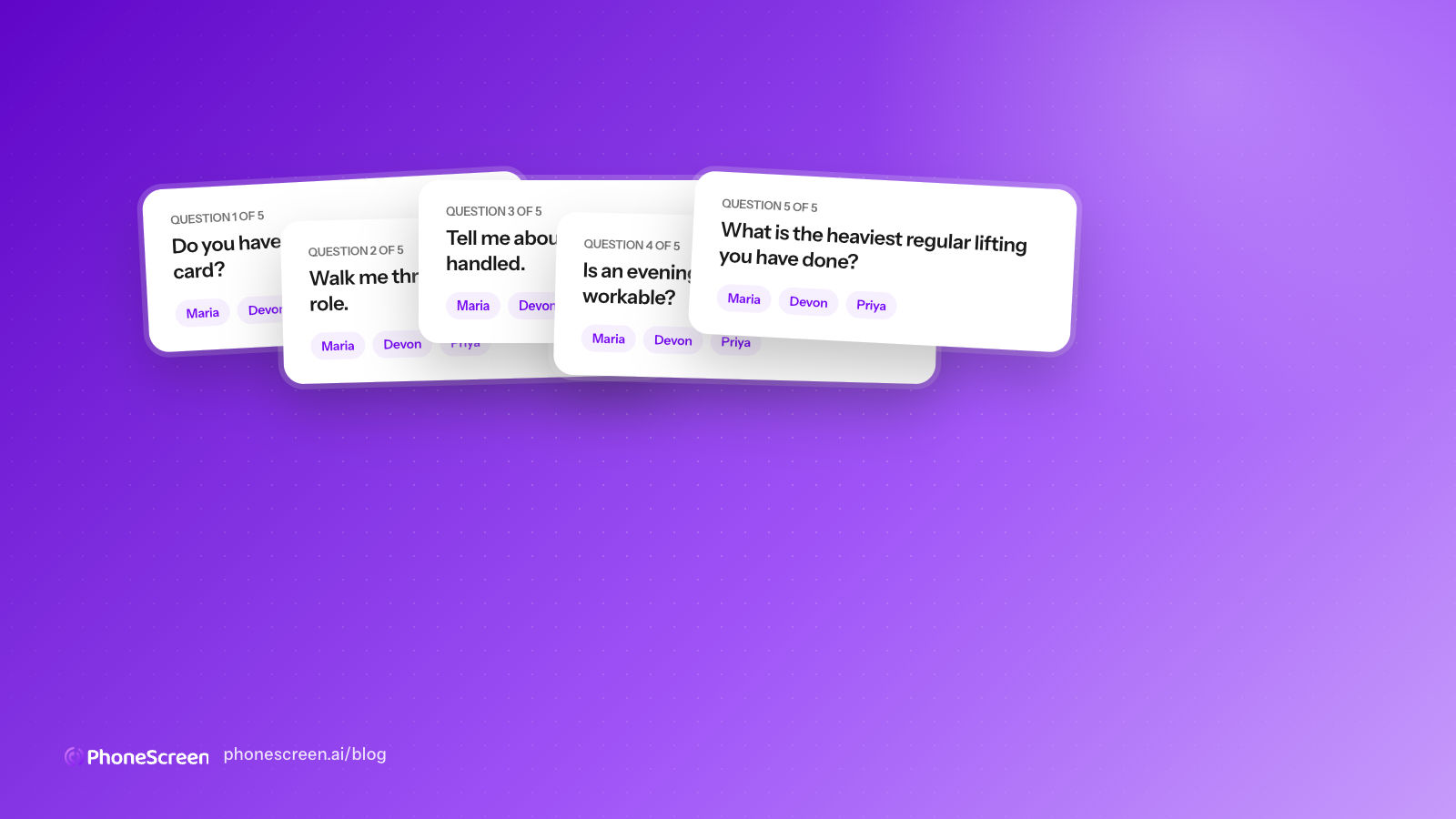
- the same questions, in the same order, in the same words;
- the same rules for follow-ups (one request for a concrete example when an answer is thin, never more);
- the same scoring rubric applied to the answer, not the accent, the pace, or the small talk;
- the same transcript and recording available for review.
The interviewer’s tone can be adjusted per organization, and the questions per role, but within a role there is no variation between candidates. That is deliberate.
Why comparison gets easier
When answers line up question by question, a recruiter can scan ten scorecards in the time it used to take to listen to one voicemail. “Candidate 3 has the forklift certification; candidates 1, 4 and 7 said they don’t” is a fact you can read off the page, not a memory of a call.
It also makes the scores meaningful. A 78 for one candidate and a 62 for another were produced by the same questions and the same rubric. That is not true of two recruiters’ gut feelings.
Consistency is not about being rigid. It is about making sure the differences you see between candidates come from the candidates.
Writing questions that hold up
Good screening questions are specific, answerable in under a minute, and tied to something that matters on day one. A few patterns that work:
- Confirm requirements directly. “Do you have a current forklift certification?” Yes/no questions are scored as yes/no, and they filter fast.
- Ask for a recent example. “Tell me about a time you handled an upset customer. What did you do?” The interviewer will ask for specifics if the first answer is vague.
- Check logistics early. Availability, commute, start date. Half of your no-hires are logistics.
- Leave opinions out. “Are you a hard worker?” gets the same answer from everyone.
Five questions is the sweet spot. Enough to sort, short enough that candidates finish.
Fairness is a feature, not a slogan
The same questions for everyone, no probing into protected characteristics, and a recording of every call you can audit. That is the structure most companies want and few achieve by hand. When a candidate or a regulator asks how screening decisions were made, you can show them, for every single call.
If you want to see the rubric in action, set up a role with your own five questions and screen yourself. The scorecard will show you exactly what a candidate sees and exactly what a recruiter reads.
Curious what the candidate hears?
Take the three-question sample screen for a paper sales job at Dunder Mifflin. Your scorecard lands in your inbox.